
HOA-Compliant Locks in Lake Mary, FL: What Homeowners Should Know
Resource Guide · Lake Mary, FL
HOA-Compliant Locks in Lake Mary, FL: What Homeowners Should Know
A large share of Lake Mary neighborhoods are governed by homeowners associations, and most of them care about how your home looks from the street — including your door hardware. Change your front door locks without checking your HOA’s rules first, and you could end up with a violation letter asking you to change them back.
This guide covers how HOAs typically regulate locks, what to check in your community’s documents before buying new hardware, and how to get smart locks and upgrades approved without drama. We do not invent rules for any specific community here — every HOA is different — but the process below works everywhere in Lake Mary. Need new hardware? See our lock replacement service.
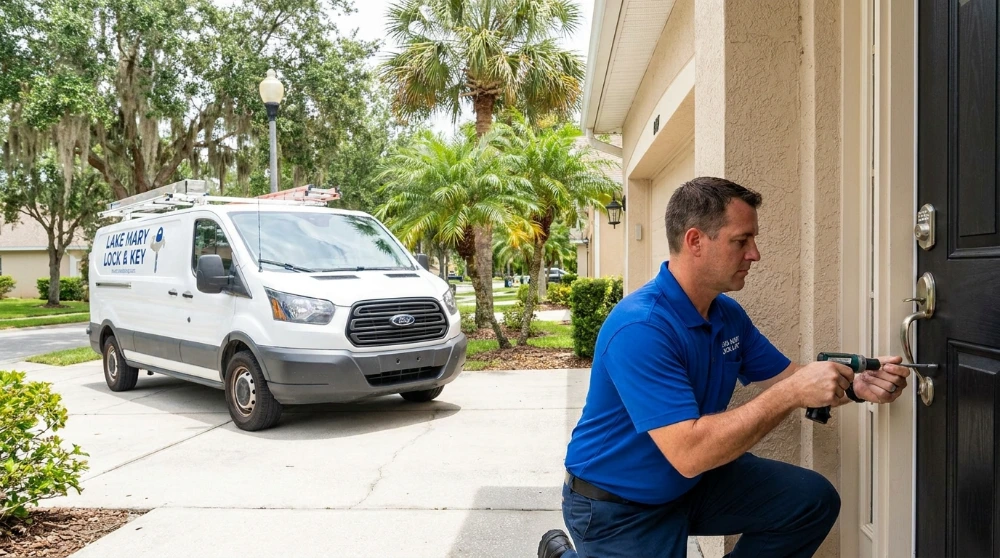
Can my HOA tell me what locks to put on my door?
Usually, an HOA cannot dictate the lock’s internal mechanism, but it can regulate what is visible from the street — the finish, style, and color of your exterior hardware. Many Lake Mary communities require exterior fixtures to match an approved look, and some require architectural review board (ARC) approval before you change any visible hardware.
The safe process is simple: check your CC&Rs or community design guidelines before buying hardware, match the existing finish and style unless you have written approval to change it, and submit an ARC request if your community requires one. Interior hardware, back doors, and garage entries are usually far less restricted.
What HOAs Typically Care About (and What They Don’t)
Exterior appearance: finish and style
The most common HOA rule is about looks, not security. Your community’s design guidelines may specify approved finishes (brushed nickel, oil-rubbed bronze, polished brass) or require that all exterior hardware on a home matches. Swapping a satin nickel deadbolt for a matte black one on your front door can violate the rules even though the lock is perfectly good. When in doubt, replace like with like — same finish, same style.
Architectural approval for visible changes
Many HOAs require you to submit a modification request to the architectural review committee before changing anything visible from the street. A front door lockset usually qualifies. The request is typically a simple form with a photo or product link, and approvals for in-kind replacements are routine — but skipping the step can mean redoing the work. Always check your community’s process first.
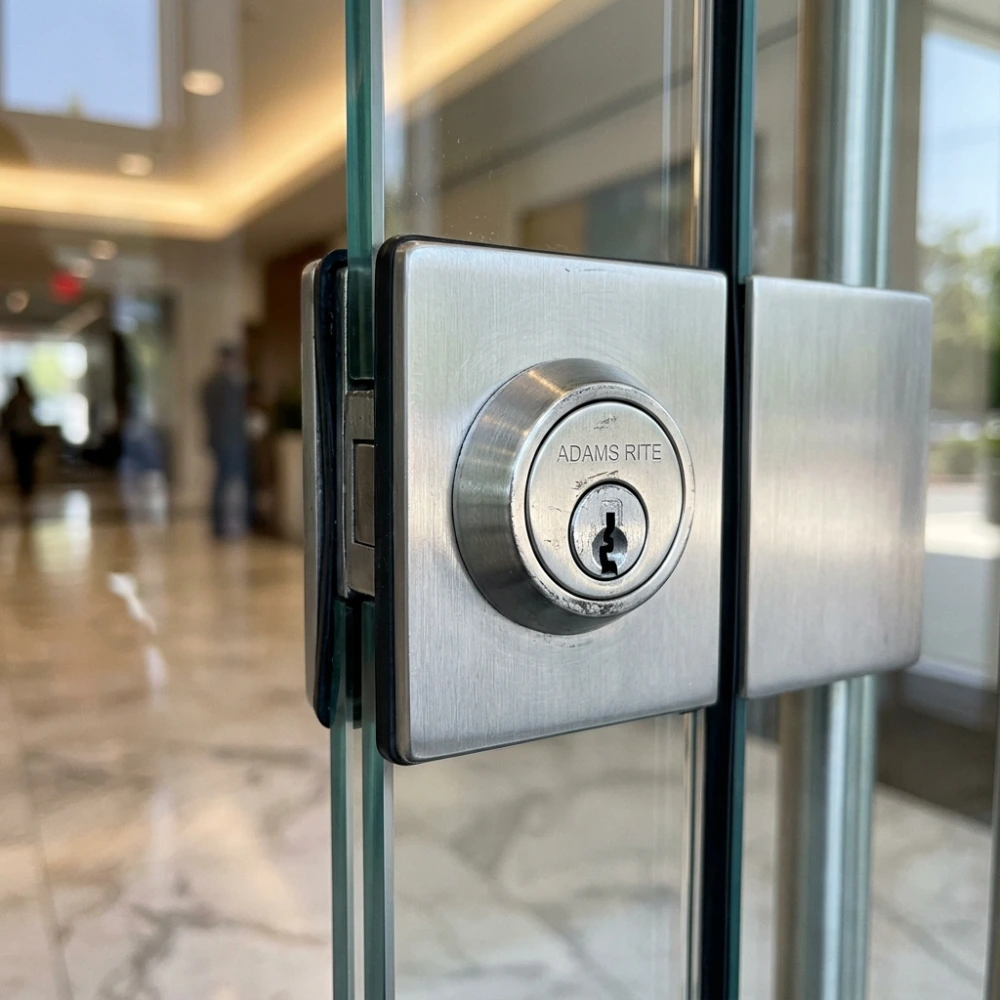
What HOAs rarely regulate
Interior door locks, hardware on doors not visible from the street (most back and side doors), and the internal workings of any lock are generally your business. A rekey — which changes only the pins inside the cylinder — is invisible from outside and virtually never an HOA issue. See our guide to rekeying vs. replacing if you are unsure which you need.
Smart Locks in HOA Communities
Smart locks are the most common source of HOA friction, and it is almost always about appearance. A bulky keypad deadbolt in a bright finish can clash with a community’s design standards, while a smart deadbolt in the same finish and profile as the original hardware sails through.
Practical tips that keep both your HOA and your security happy:
- Match the existing finish — choose a smart lock in the same finish as your current hardware or the community standard.
- Keep the exterior profile low-key — many smart locks have a traditional-looking exterior with the electronics hidden inside. These are the easiest HOA sell.
- Back and side doors first — if the front door is strictly regulated, smart features on a less-visible door usually face no restrictions.
- Submit the product photo with your ARC request — a picture showing the exterior appearance answers the board’s real question before they ask it.
- Renters: get written permission — if you lease your home, changing any lock requires your landlord’s approval first, on top of any HOA rules.
For help choosing a model that fits both your door and your community’s standards, see our smart lock installation page — we install smart locks across Lake Mary and can advise on finishes and profiles that blend in.
A Simple Process for HOA-Friendly Lock Changes
1. Read your CC&Rs and design guidelines
Look for sections on exterior fixtures, doors, or architectural modifications. Note any approved finish lists or style requirements. If the documents are vague, that is normal — most are written broadly.
2. Ask your board or management company
A quick email with a photo of the hardware you want to install usually gets a clear yes or no. Boards deal with this regularly, and asking first is always better than receiving a violation notice afterward.
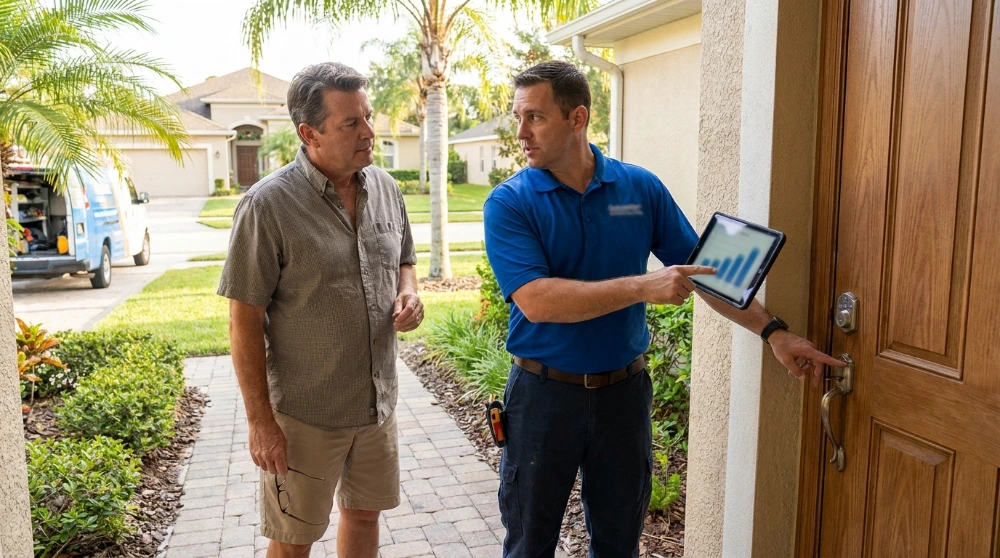
3. Keep the paperwork
Save any written approval with your home records. If the board changes or a new neighbor complains, a dated approval email ends the conversation.
4. When in doubt, rekey instead of replace
If you need new keys — after a move, a lost key, or a tenant change — a rekey changes nothing visible and sidesteps the entire HOA question. It is the path of least resistance and the right security move.
Renters have an extra layer
If you rent your Lake Mary home, your lease almost certainly requires landlord approval before changing locks — and your landlord may have master-key or access obligations. Get written permission first, and consider a rekey (which preserves the hardware) over a full replacement.
Related Guides & Services
HOA rules add one more layer to any lock project — these resources help you plan it right:
- residential locksmith services in Lake Mary — full-service lock work for local homes
- lock replacement — swap hardware while keeping the look your HOA requires
- smart lock installation — keyless options that can still meet community standards
- what to ask a locksmith before hiring — handy before booking any HOA-related lock work
HOA & Lock Questions
Do I need HOA approval to change my front door lock?
It depends on your community. Many Lake Mary HOAs require architectural review board approval before changing any hardware visible from the street. Check your CC&Rs or ask your board or management company — a quick email with a product photo usually gets a clear answer.
Can my HOA ban smart locks?
An HOA generally cannot ban the smart function, but it can regulate the exterior appearance — finish, size, and style. Choosing a smart lock that matches your community’s approved finish and has a traditional exterior profile avoids most issues.
Does rekeying my locks require HOA approval?
Almost never. Rekeying changes only the internal pins of the cylinder — nothing visible changes on the door. If you need new keys without changing hardware, a rekey sidesteps the entire HOA question.
What happens if I change my locks without approval?
Your HOA can issue a violation notice requiring you to restore the original appearance — meaning you pay for the work twice. The modification request process is usually simple, so asking first is always the cheaper path.
Are back door and garage locks subject to HOA rules?
Usually far less so. HOA design rules focus on what is visible from the street. Hardware on back doors, side doors, and interior garage entries is typically unrestricted — but check your specific community’s guidelines to be sure.
I’m renting in an HOA community. Can I change the locks?
Get written permission from your landlord first — most leases require it, and landlords may need to maintain access. Your landlord’s approval does not replace HOA rules either, so visible changes may still need board approval.
Questions About Your Locks?
Upgrading hardware in an HOA community? We will help you pick locks that meet your security needs and your community’s appearance standards — and rekeying is always an option when you just need new keys. Call The Lake Mary Locksmith.
Available 24 hours a day
Licensed & insured
4300 W Lake Mary Blvd, Lake Mary, FL 32746